01
Black
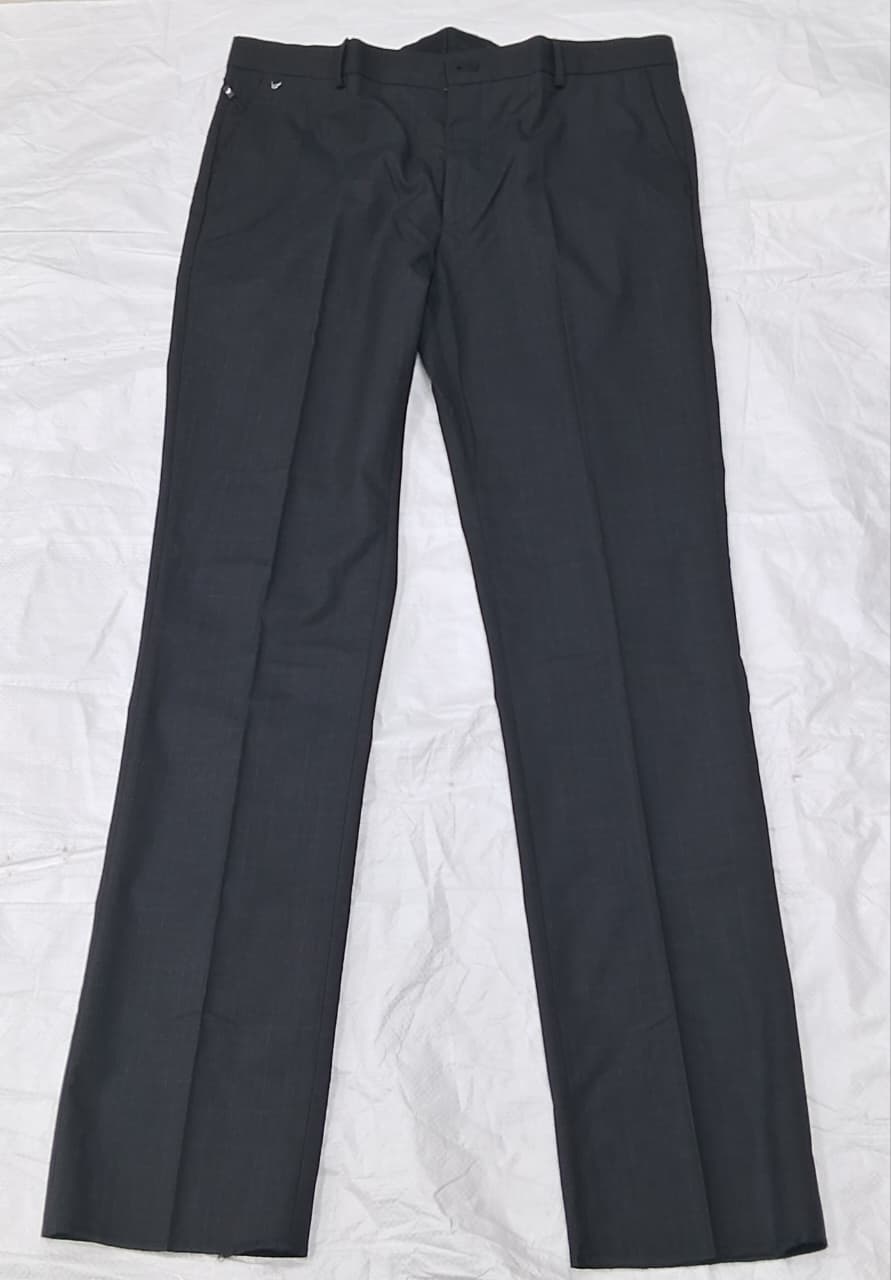
The most formal neutral. Best for evening events and ceremonies. In daylight office settings it can look severe, so soften it with grey or white shirting.
Options Mall · Juhu
The
Index
Men’s formal pants — an atelier edition
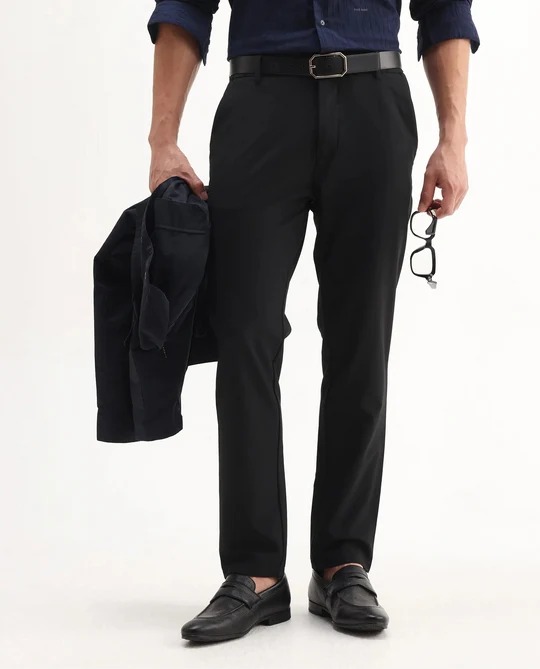
Modern formal pants defined by proportion, refined detailing and timeless sophistication.
An introduction
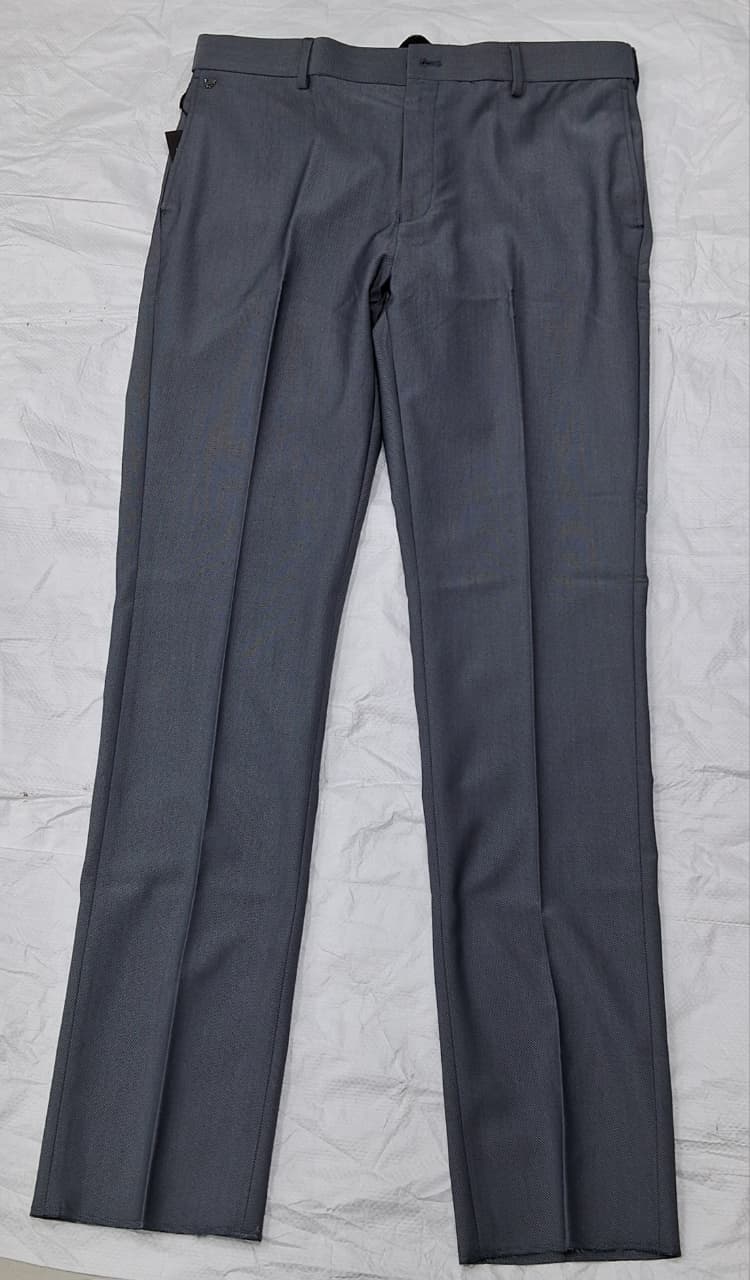
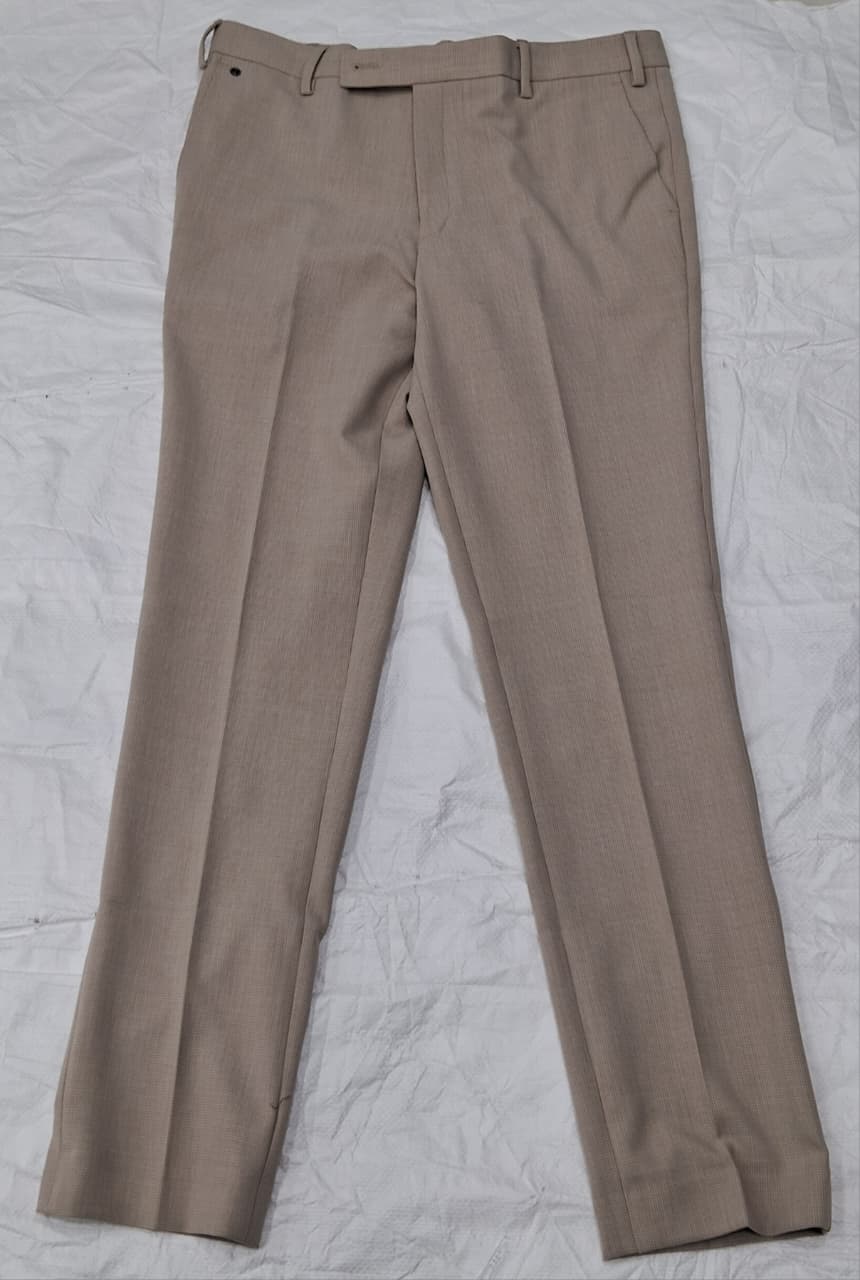
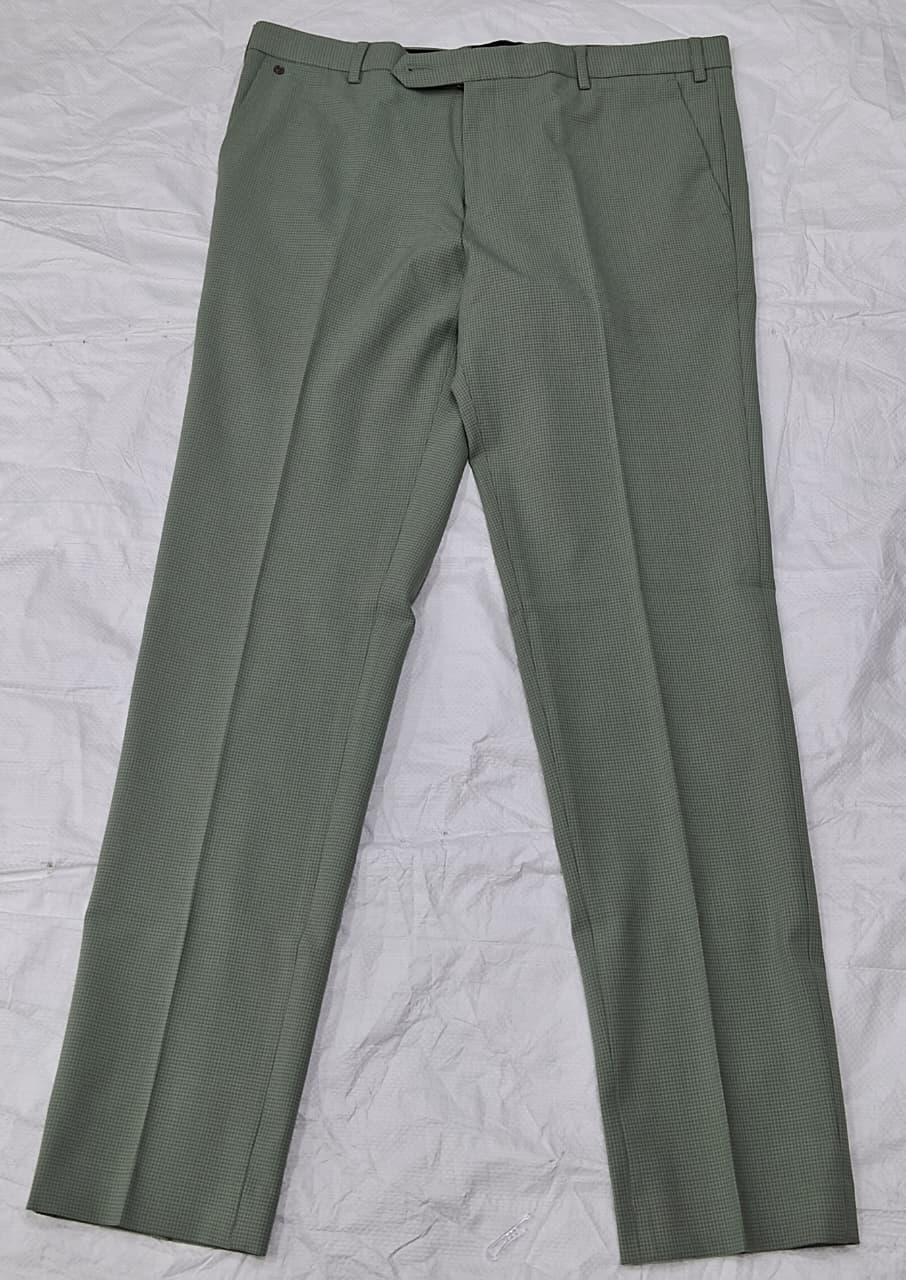
Long before the business suit, men wore breeches gathered at the knee. Full-length trousers moved into respectable dress during the nineteenth century, and as the lounge suit took over from the frock coat, the trouser became the steady base of a man’s formal wardrobe. Its details came from practical needs: a crease that showed a garment had been cared for, pleats that let a man sit in comfort, and turn-ups that added weight to the hem.
Formal trousers have changed shape again and again since then. Some decades favoured high rises and generous legs, others slim, low cuts. What has lasted is their job. Formal pants set the line of the lower half of the body. They decide whether a jacket looks balanced, whether a shirt sits cleanly at the waist and whether shoes look deliberate or an afterthought.
That is why proportion matters more than any single trend. The rise sets where the waist falls, the seat and thigh decide how the cloth moves, and the leg opening and length set the final line over the shoe. Small changes to any of them alter the whole silhouette.
Fabric and construction finish the job. The weight and weave of the cloth decide how the leg drapes and whether the crease holds. A well-built waistband keeps a shirt in place through a long day. Today, as office dress codes relax into “smart” and “business casual”, well-chosen formal pants matter more, not less: they are what keeps a pared-back outfit looking professional.
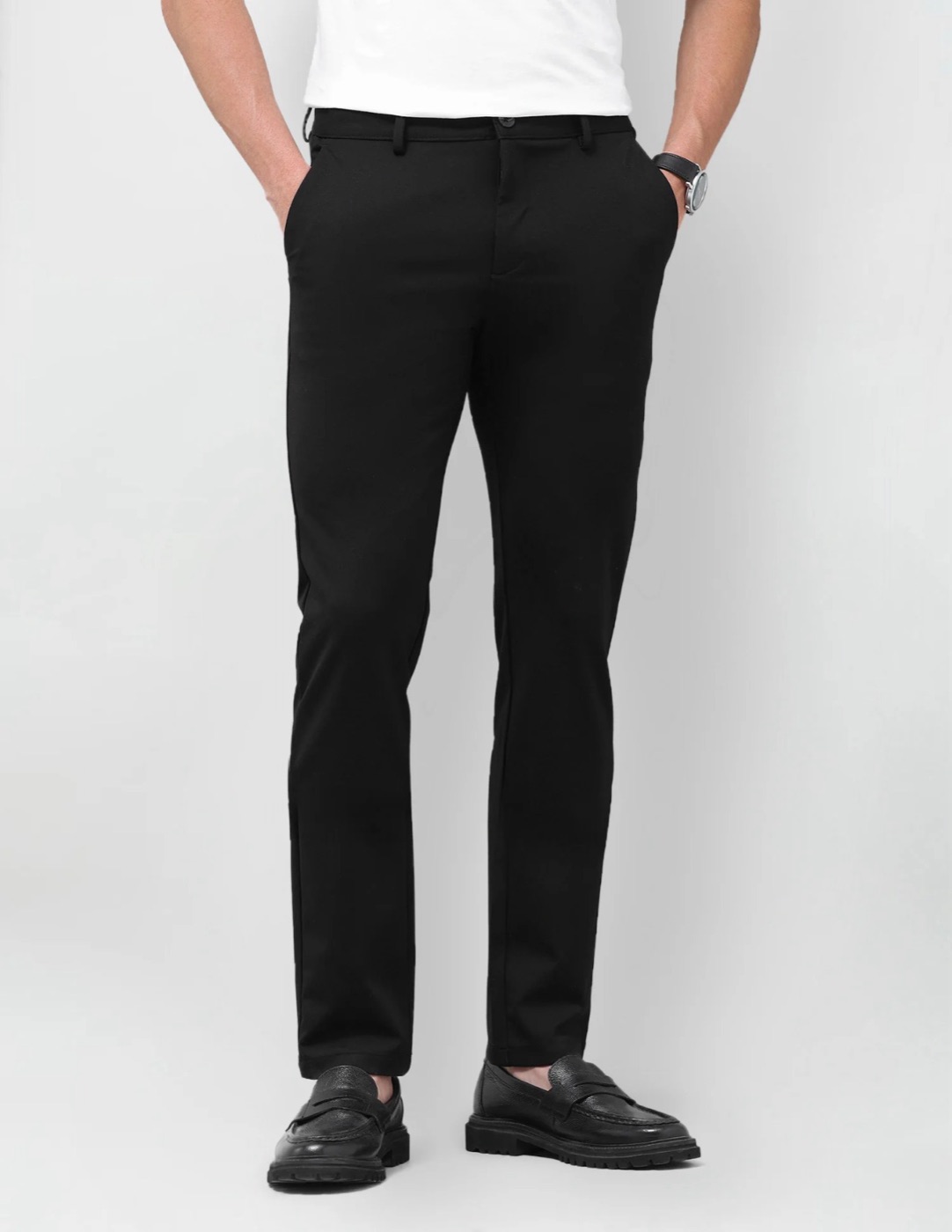
A study in form
Every formal trouser is a set of choices about shape: how close it sits through the thigh, how it narrows to the hem and where it finds the waist. Below are the main categories, each with its own character.
Study every style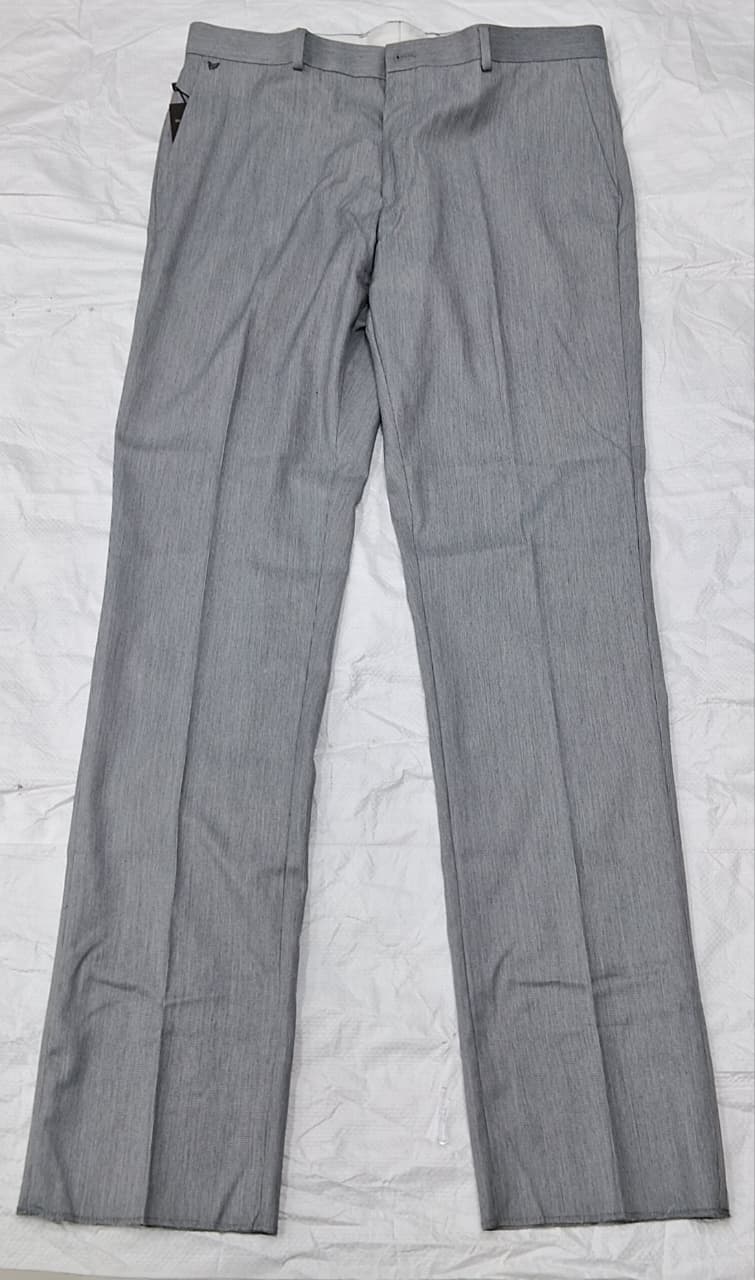
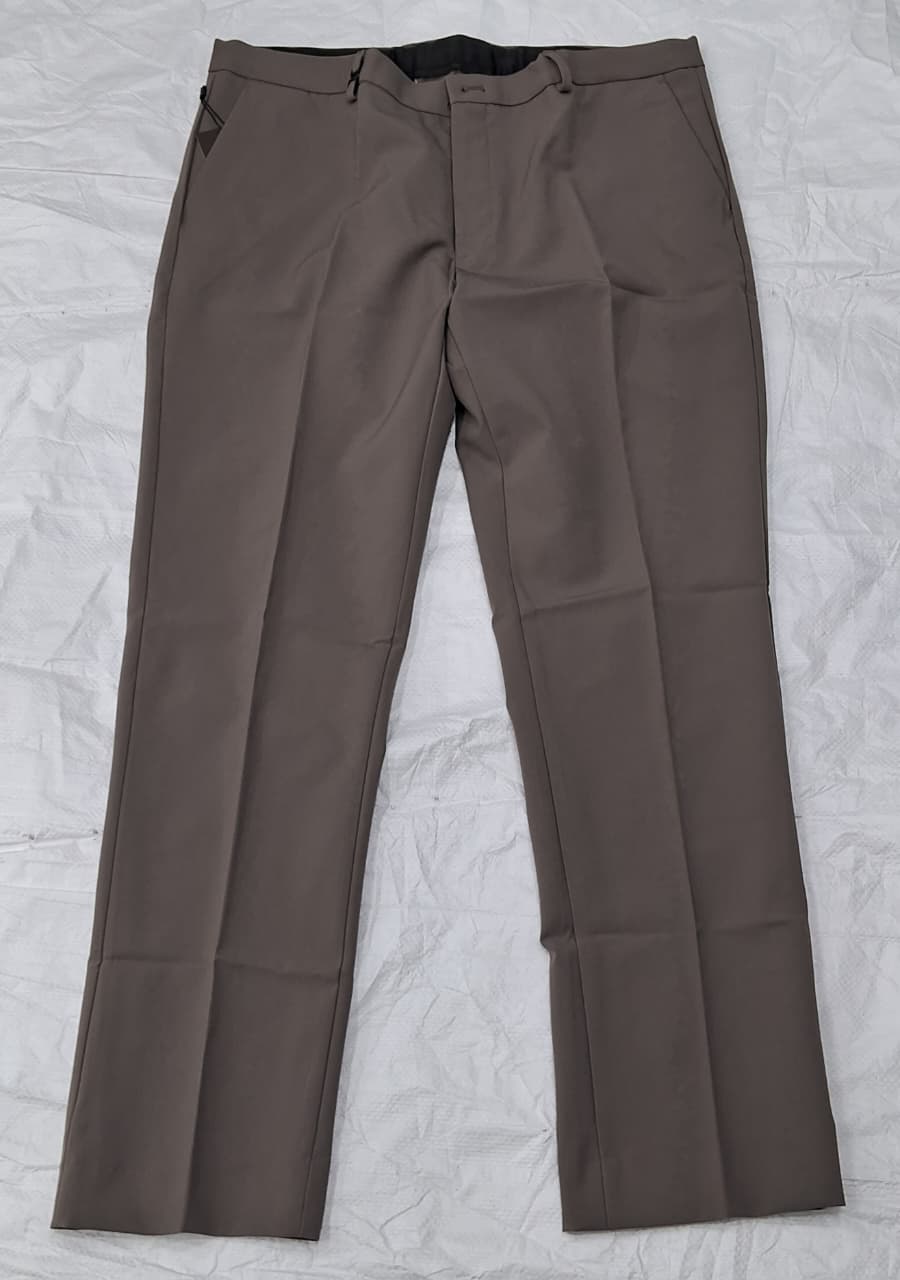
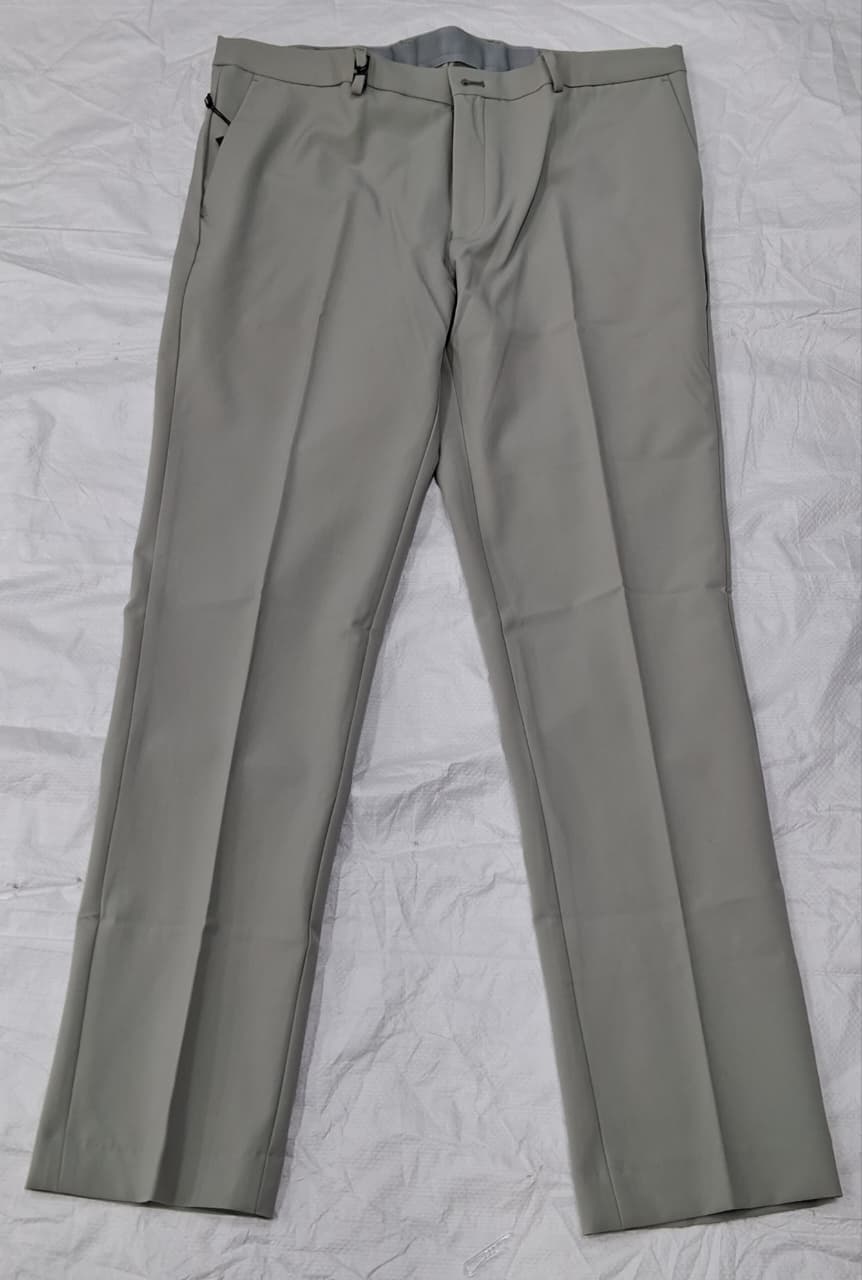
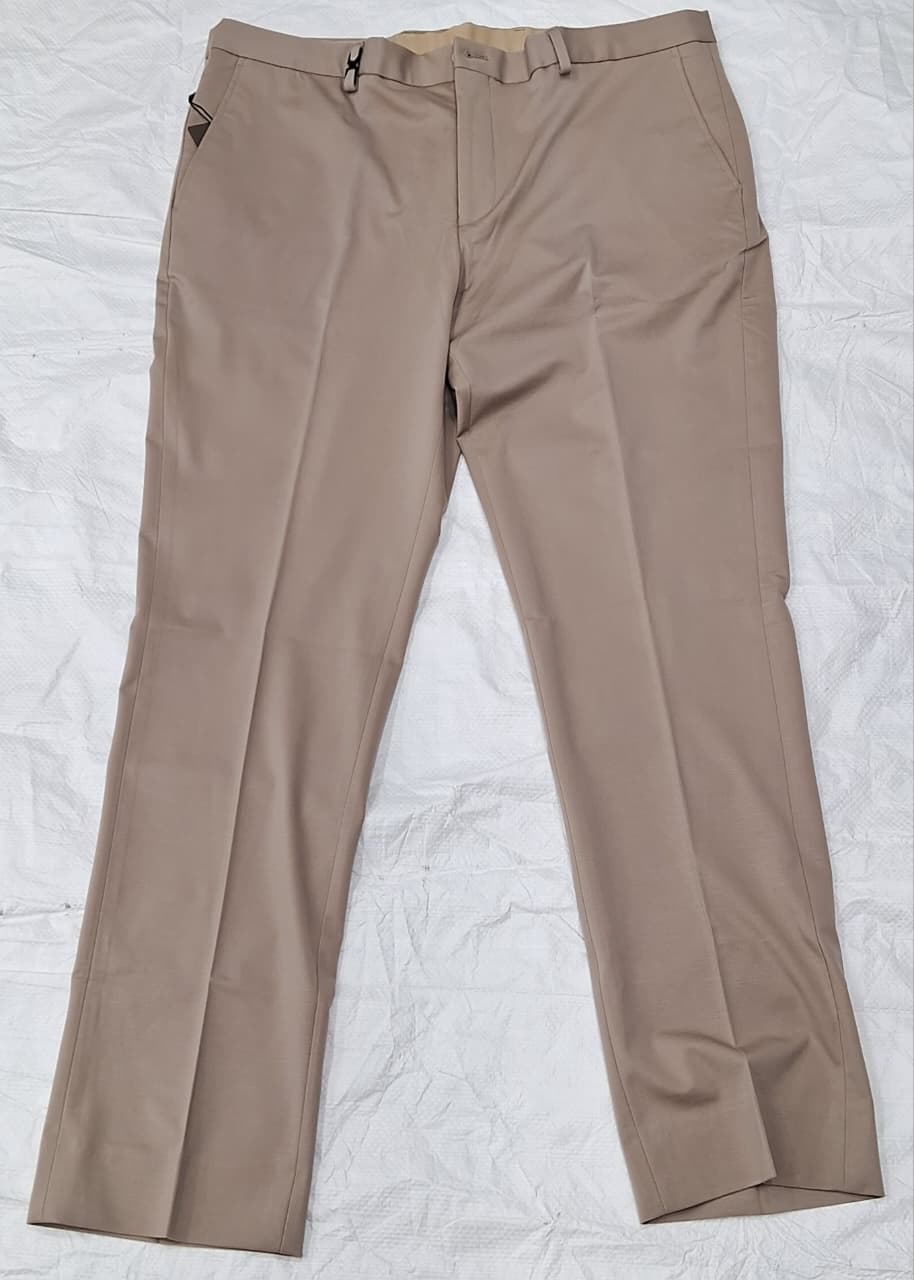
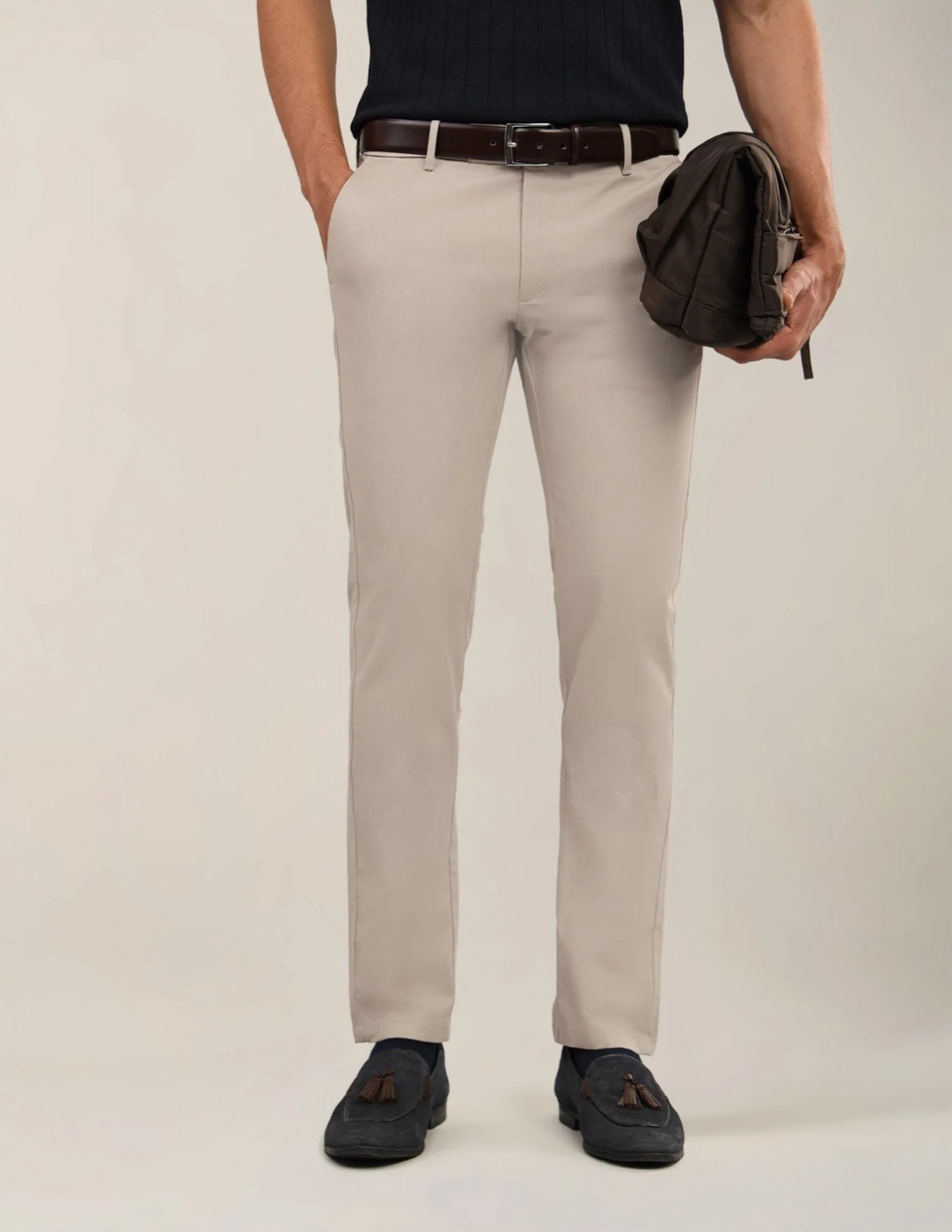
A mid-to-high rise, a straight leg and a pressed crease. The reference point every other style is measured against, and the one that suits the widest range of occasions.
Closer through the seat and thigh, with a narrower leg. A clean, contemporary line that works best with shorter jackets and sleek footwear.
Room through the seat and thigh for comfort over long days and long commutes, with a leg that falls without clinging.
The same width from knee to hem. A column-like line that adds height and balances broad shoulders or a fuller jacket.
Fuller at the thigh, narrowing gradually to the ankle. Comfortable to move in yet tidy at the shoe, a favourite for modern office dressing.
Folds stitched in at the waistband give the cloth room over the hips when seated. Pleats bring a softer, more traditional drape and pair well with fuller tailoring.
Formal construction cut with a modern sensibility: often a slightly shorter length, a clean flat front and a refined taper. Built for wardrobes that move between boardroom and dinner.
A tailoring consultation
A trouser fits through a chain of measurements, each affecting the next. A good fit doesn’t mean tight or loose. It means each point sits where your body and the occasion need it to.
It should sit closed without pulling, and hold up without a belt doing all the work.
The distance from crotch to waistband. It sets where the trouser sits and how long the leg looks.
Smooth across the back. Horizontal pulls mean too tight, loose folds mean too much cloth.
Enough room to sit and stride. The cloth should skim, not grip.
The hinge of the leg line. Its width decides whether a leg reads tapered or straight.
The hem width. It should cover the shoe neatly without swallowing it.
Chosen with your shoes on, it decides the “break” where cloth meets shoe.
A straight or slightly angled finish, set by the leg opening and the break you want.
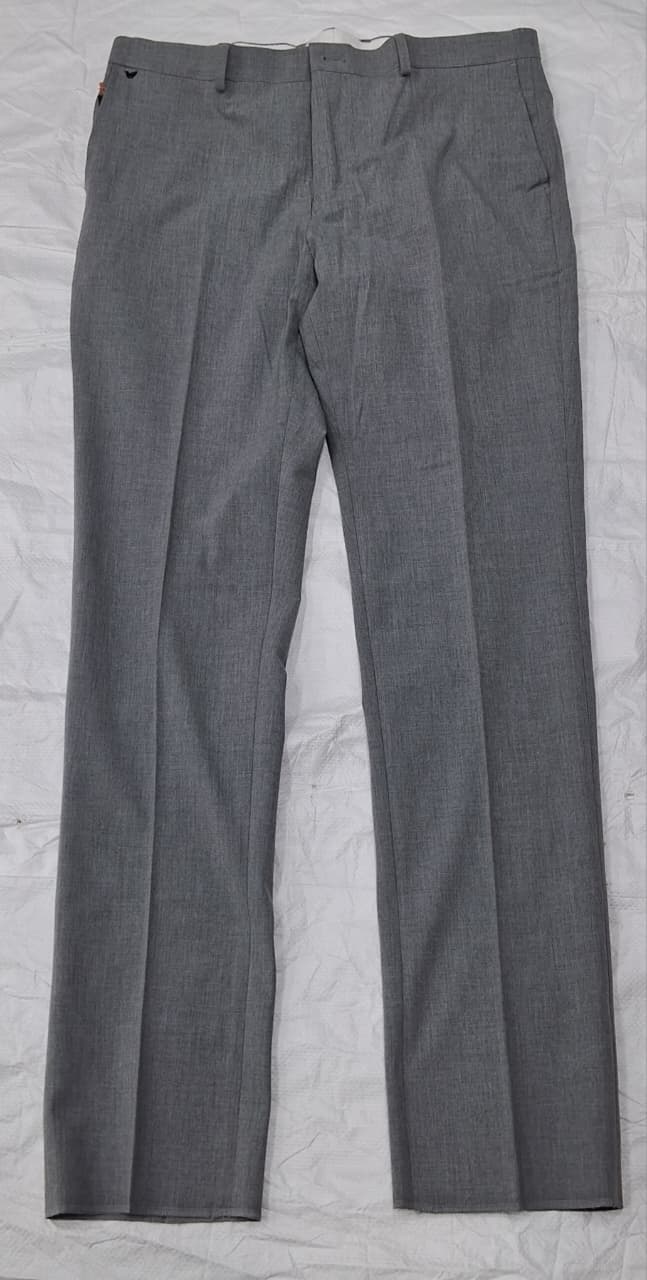
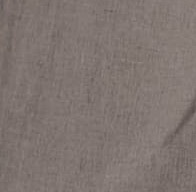
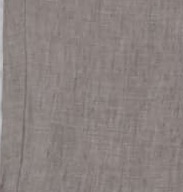
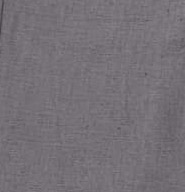
Valued for natural resilience and drape. Wool holds a crease well, recovers from wrinkles overnight and comes in weights from tropical to winter.
Wool mixed with synthetic fibres for added durability, crease retention and often easier care, while keeping much of wool’s handle.
Breathable and comfortable in warm climates. Formal cotton cloths such as twills and gabardines are smooth and dense, with a softer, more matte finish than wool.
Cotton combined with other fibres to reduce creasing, add stretch or improve shape retention.
Polyester with viscose or wool, for wrinkle resistance, colour fastness and simple upkeep. A practical choice for daily office wear.
A small share of elastane in the weave adds give at the knee and seat, useful for travel and long, active days.
Herringbone, birdseye, sharkskin and fine checks add depth up close while staying formal from across the room.
Lighter cloths for heat and humidity, mid-weights for year-round air-conditioned offices, heavier weaves for cool travel.
A library of cloth
Cut gives a trouser its shape, but the fabric decides how it falls, how it moves and how it looks at the end of a long day.
When you feel a trouser fabric, look at both its surface and its behaviour. Does it fall straight when held from the waistband? Does it spring back after being creased in the hand? Is the weave tight enough to keep its shape, yet open enough to breathe in Mumbai’s climate? A fabric’s label tells you its composition; your hand tells you the rest.
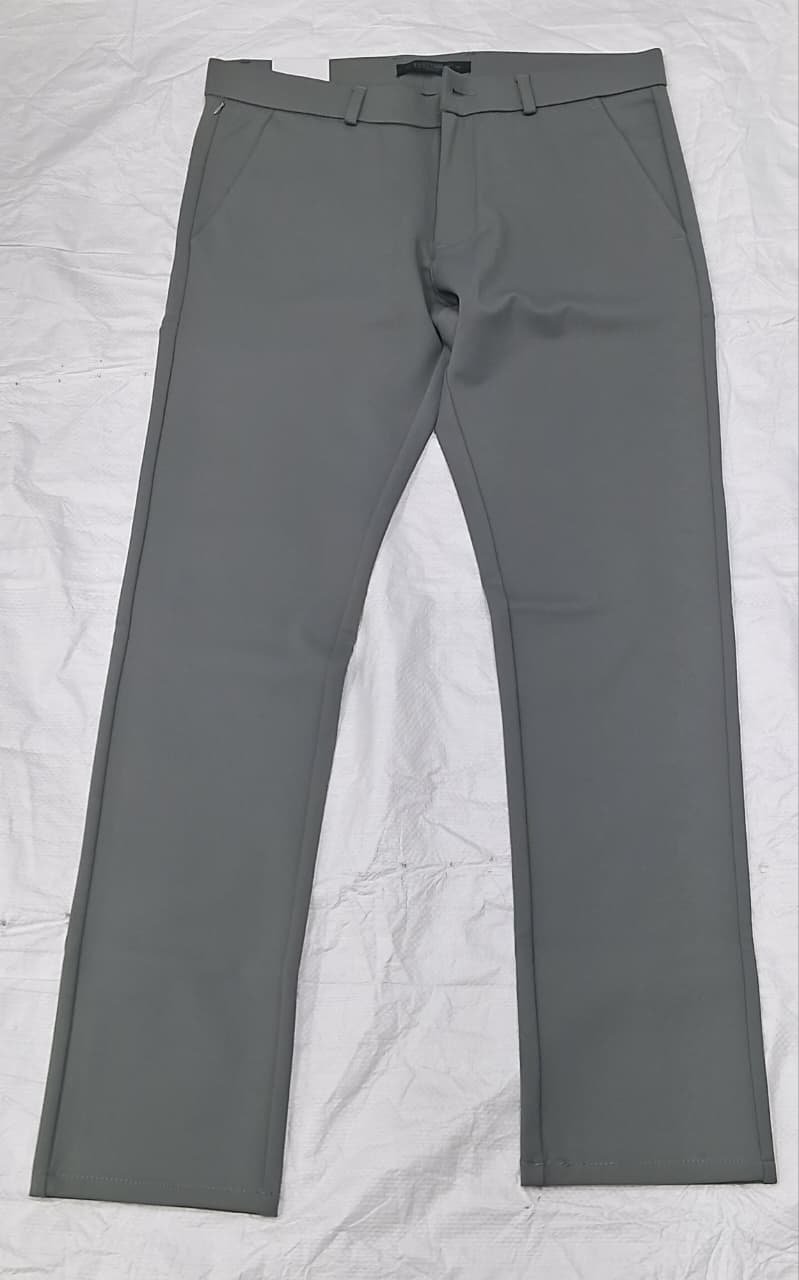
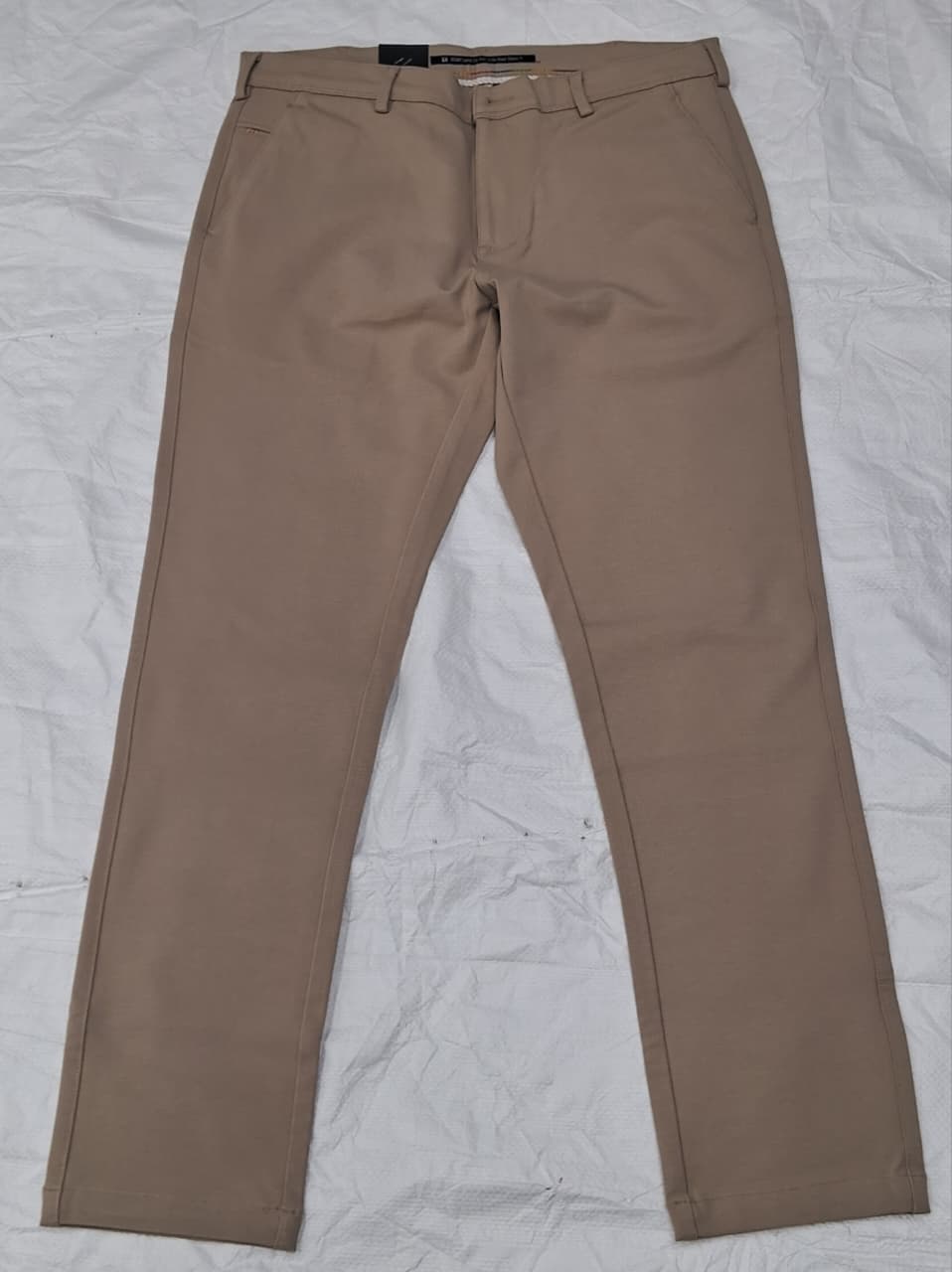
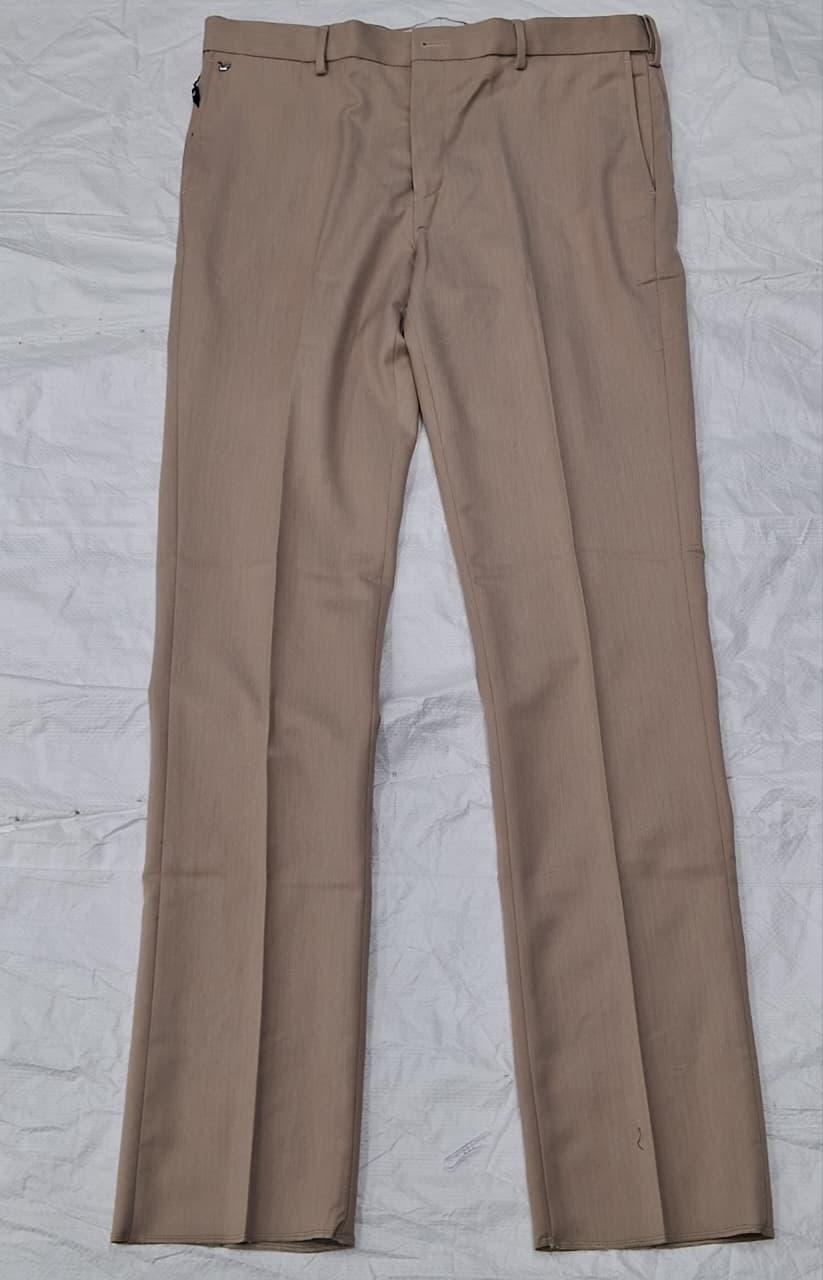
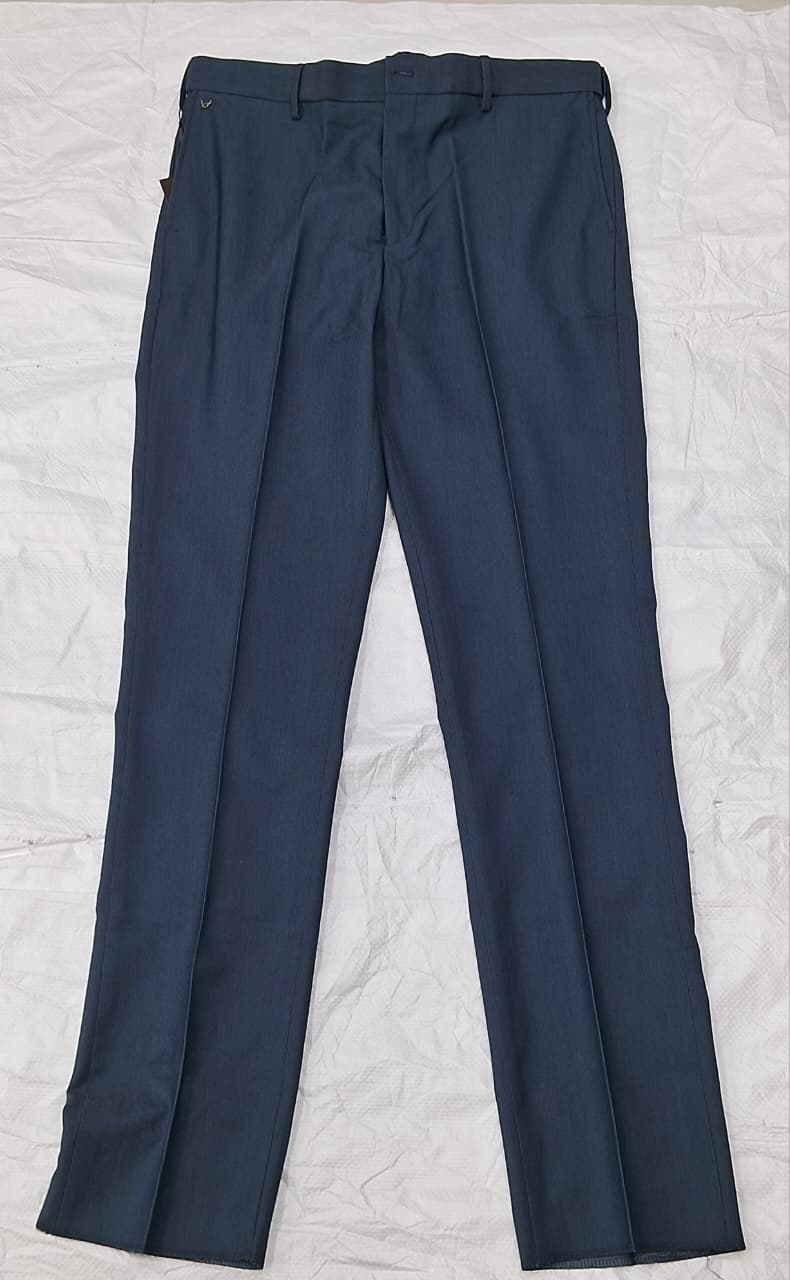
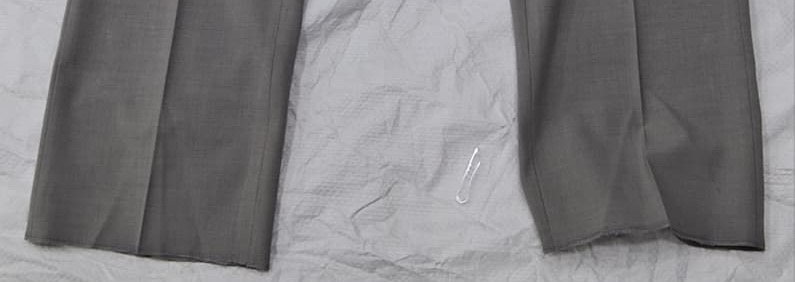
The swatches here are close-ups of the cloth of trousers photographed for this site. They show surface and colour, not a confirmed fibre content. Always check the garment label for composition and care.
Enter the fabric libraryThe surface character of the weave: smooth, dry, crisp or softly brushed.
How the cloth hangs under its own weight and how cleanly it falls from hip to hem.
Its ability to hold shape, a crease and a clean line at the leg.
Softness against the skin, and freedom when sitting or walking.
How readily air and moisture move through. Vital in heat and humidity.
Recovery after bending, and how the cloth follows the stride.
Washing, pressing and storage needs. Always read the care label.
A formal wardrobe rarely needs loud colour. Its richness comes from a set of considered neutrals, each with its own temperament and its own partners in shirts, jackets and shoes.
The most formal neutral. Best for evening events and ceremonies. In daylight office settings it can look severe, so soften it with grey or white shirting.
Possibly the most versatile trouser colour. Works with white, blue, pink and lavender shirts, and with black or dark brown shoes.
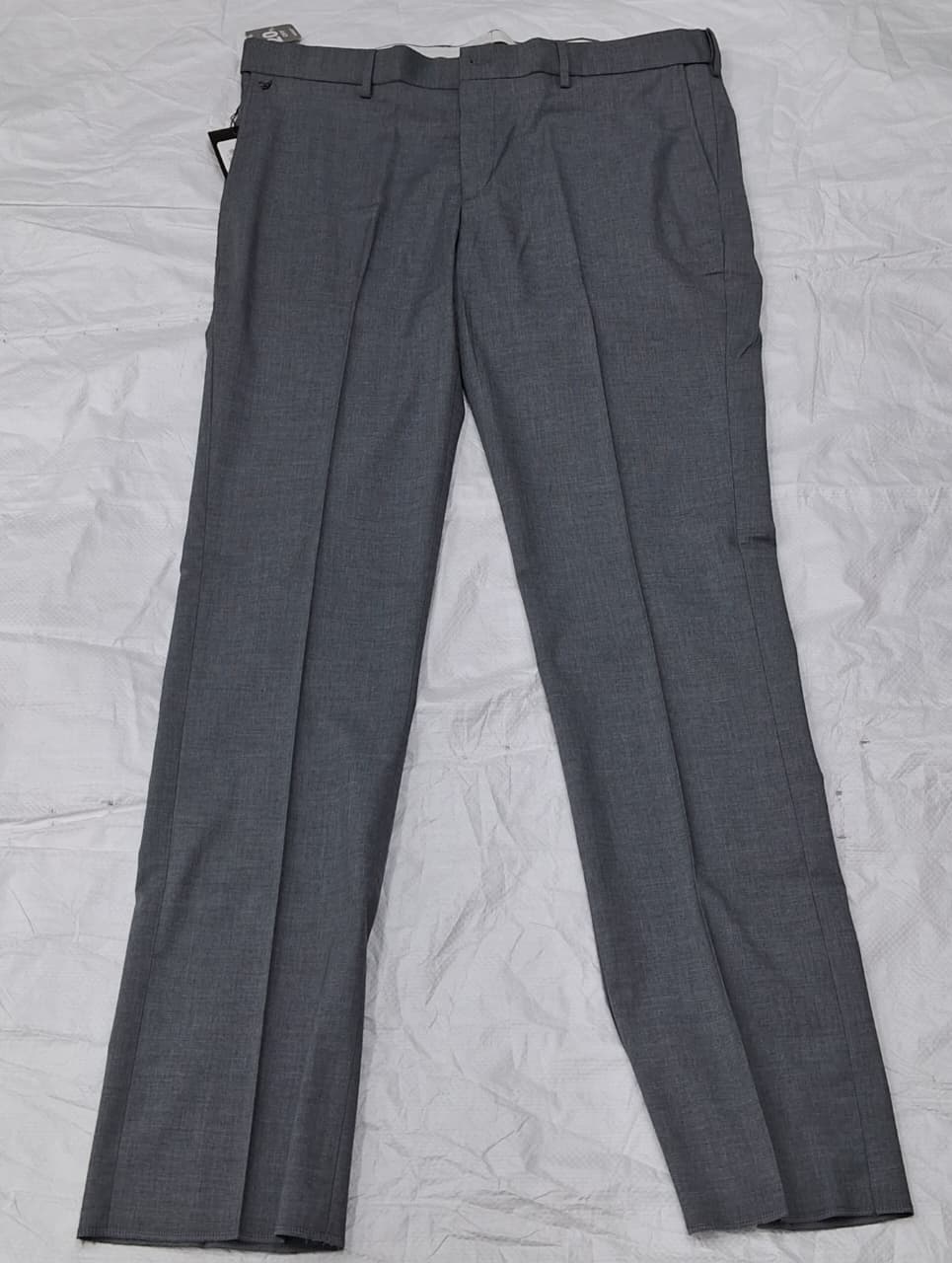
Authoritative without being severe. Pairs naturally with white and pale blue, with brown or burgundy leather, and with grey or camel jackets.
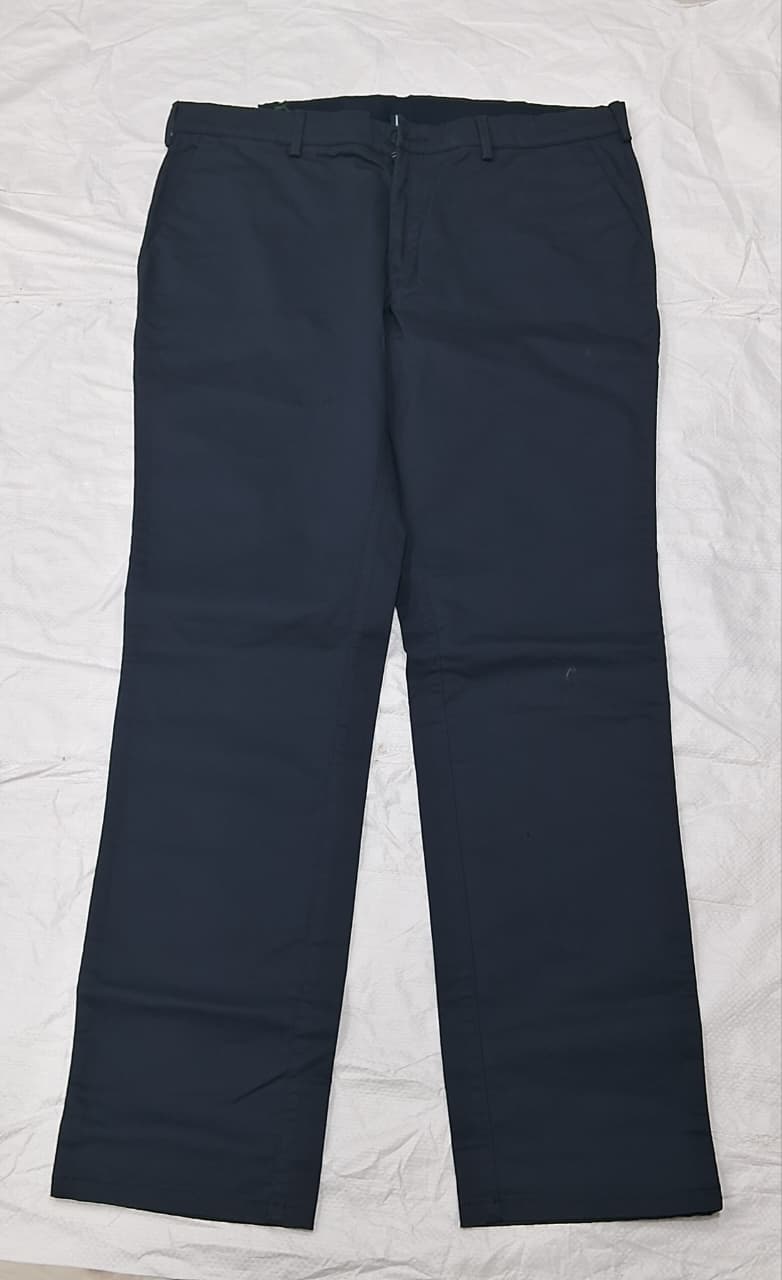
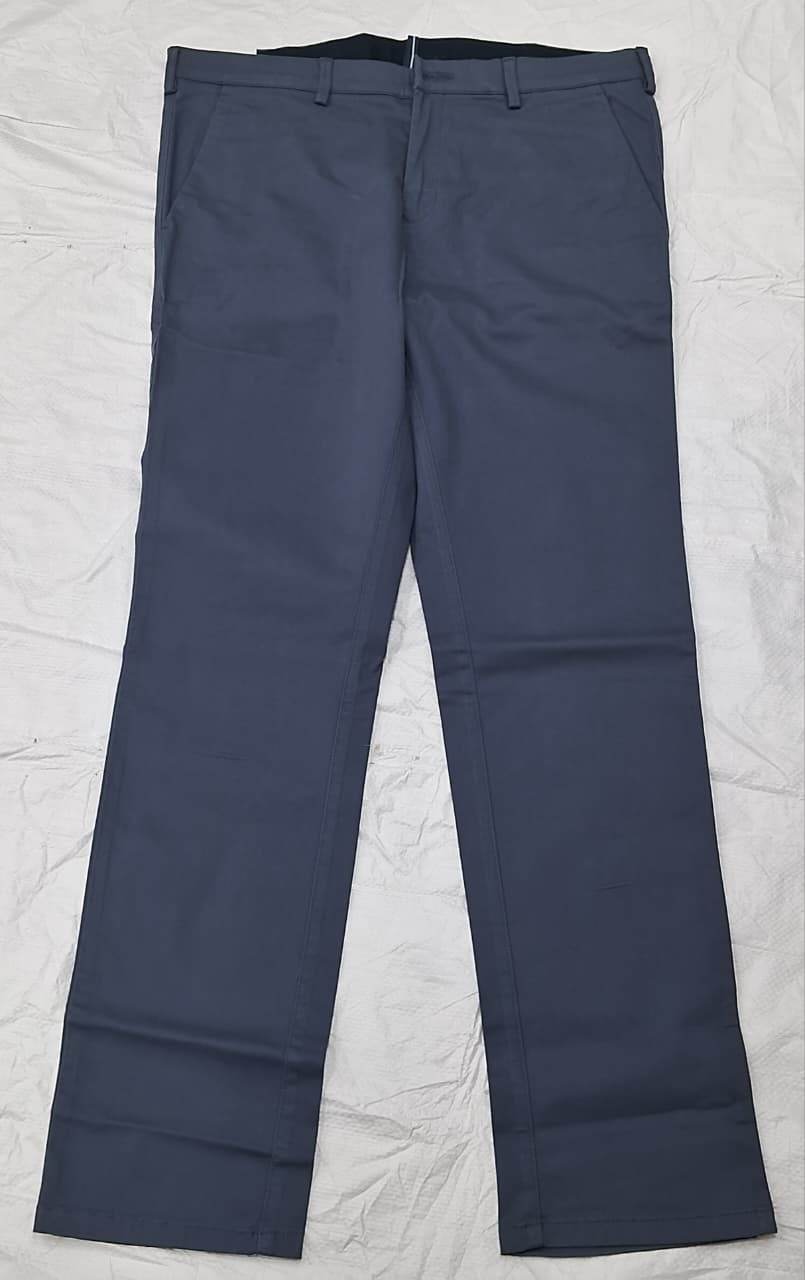
A calm mid-tone that bridges dark and light. Lets a navy blazer or patterned shirt lead the outfit.
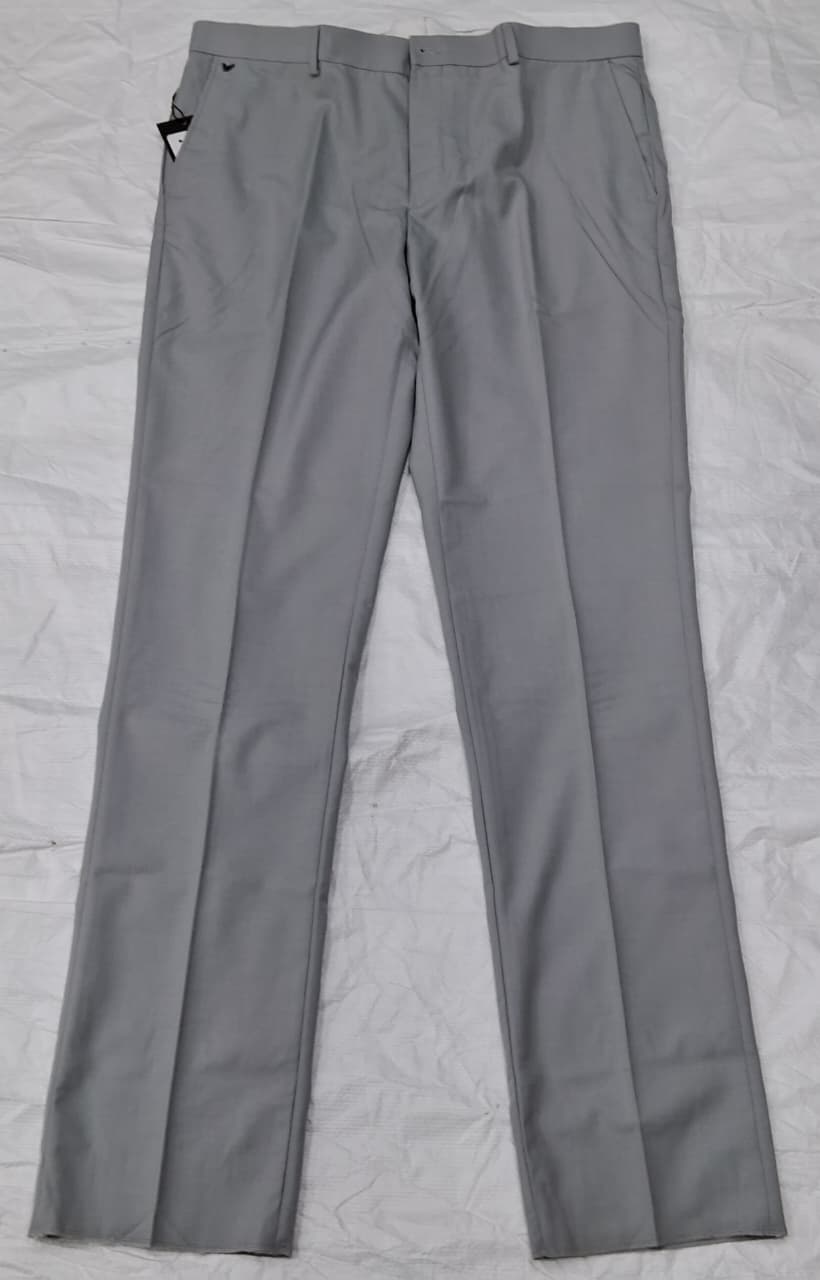
Light and warm-weather friendly. Lovely with navy jackets, white or blue shirts and mid-brown shoes.
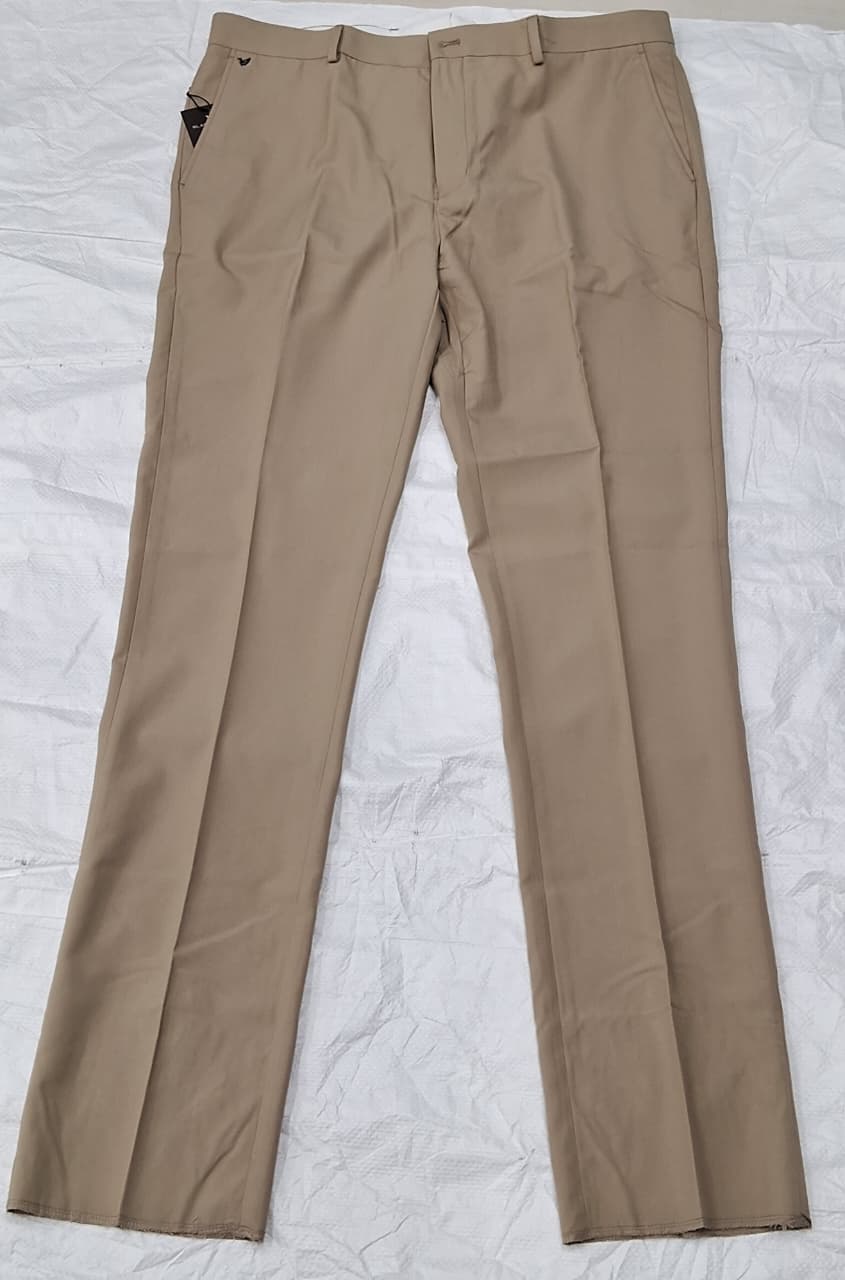
A grey-brown that feels quietly modern. It flatters olive, cream and soft blue shirting.
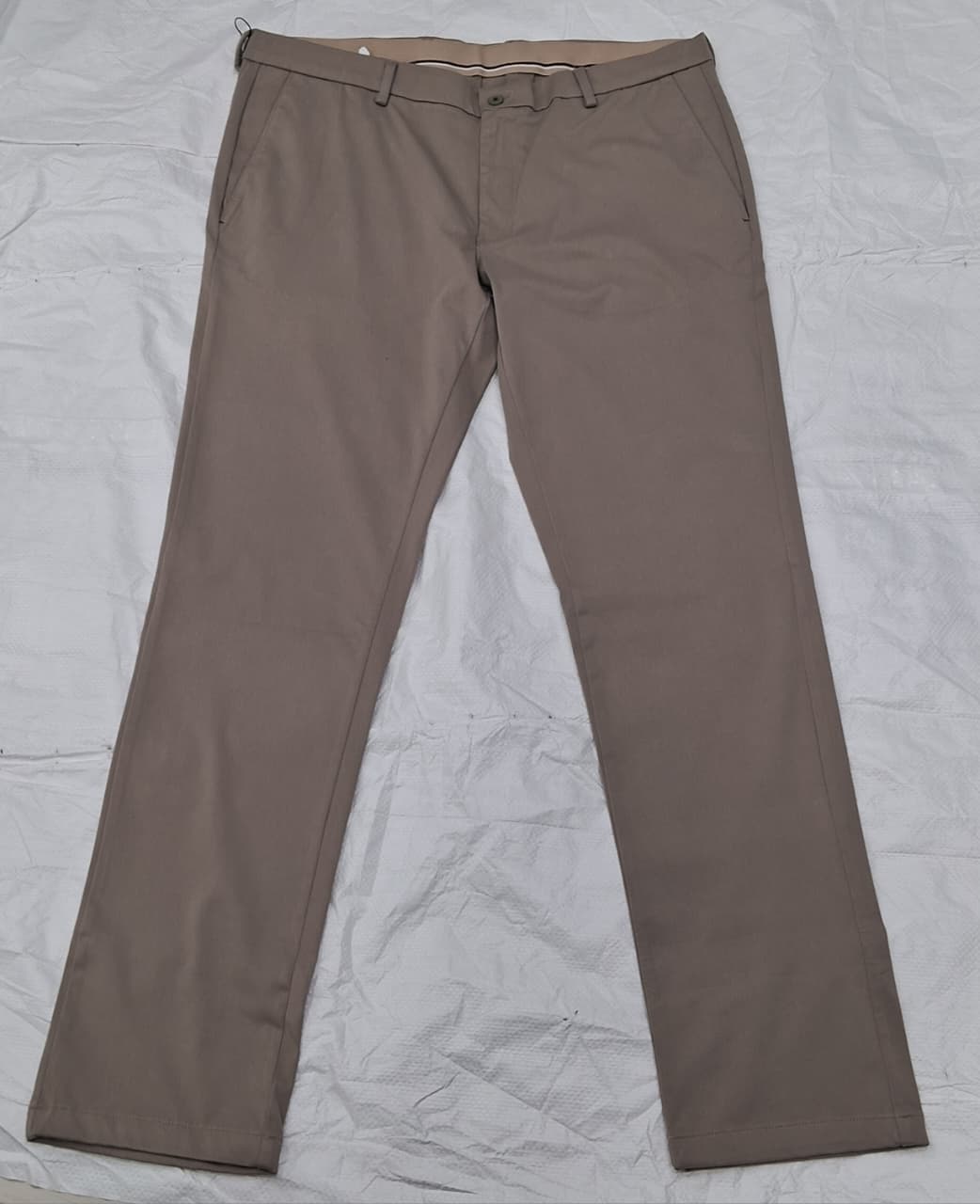
Deep and warm, best with cream, white and sky-blue shirts and with brown or tan leather.
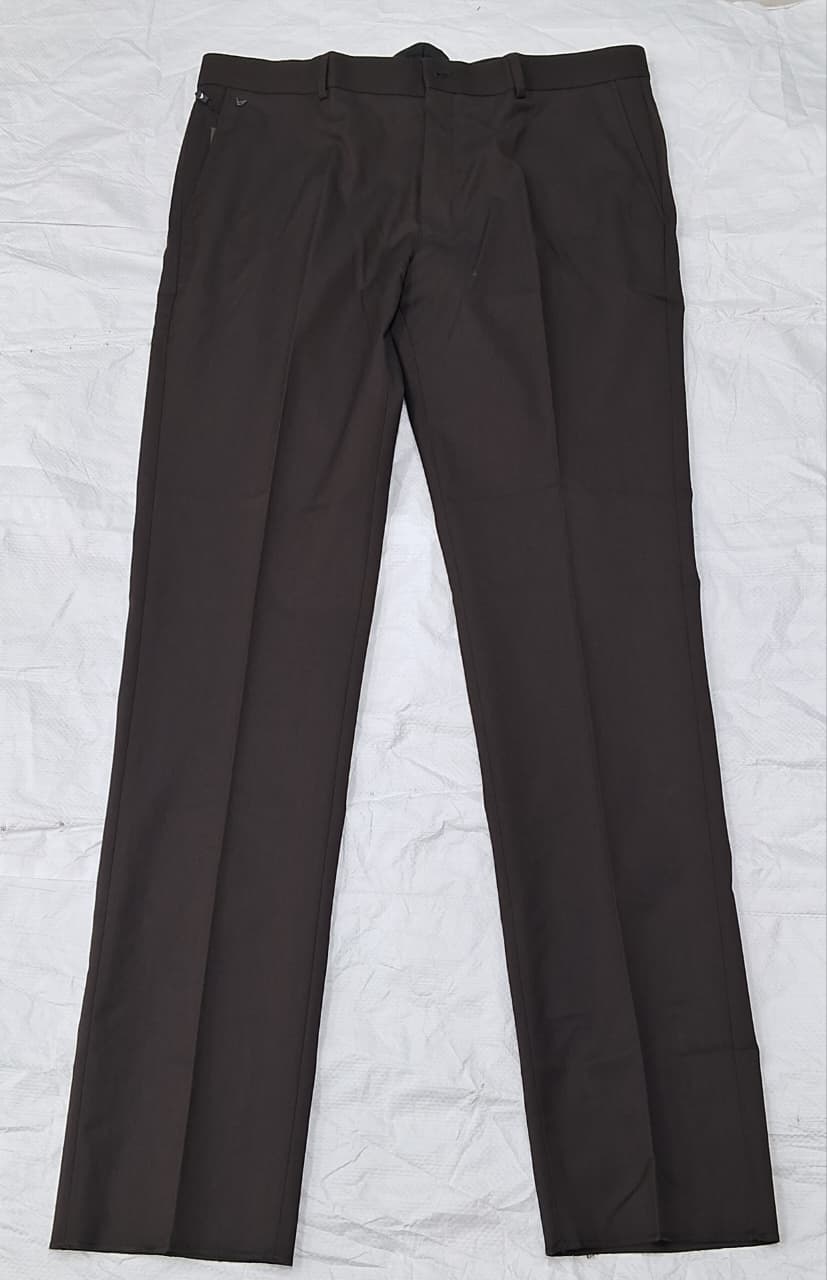
A refined earth tone for smart-casual Fridays and travel. Pairs with white, ecru and denim-blue shirts.
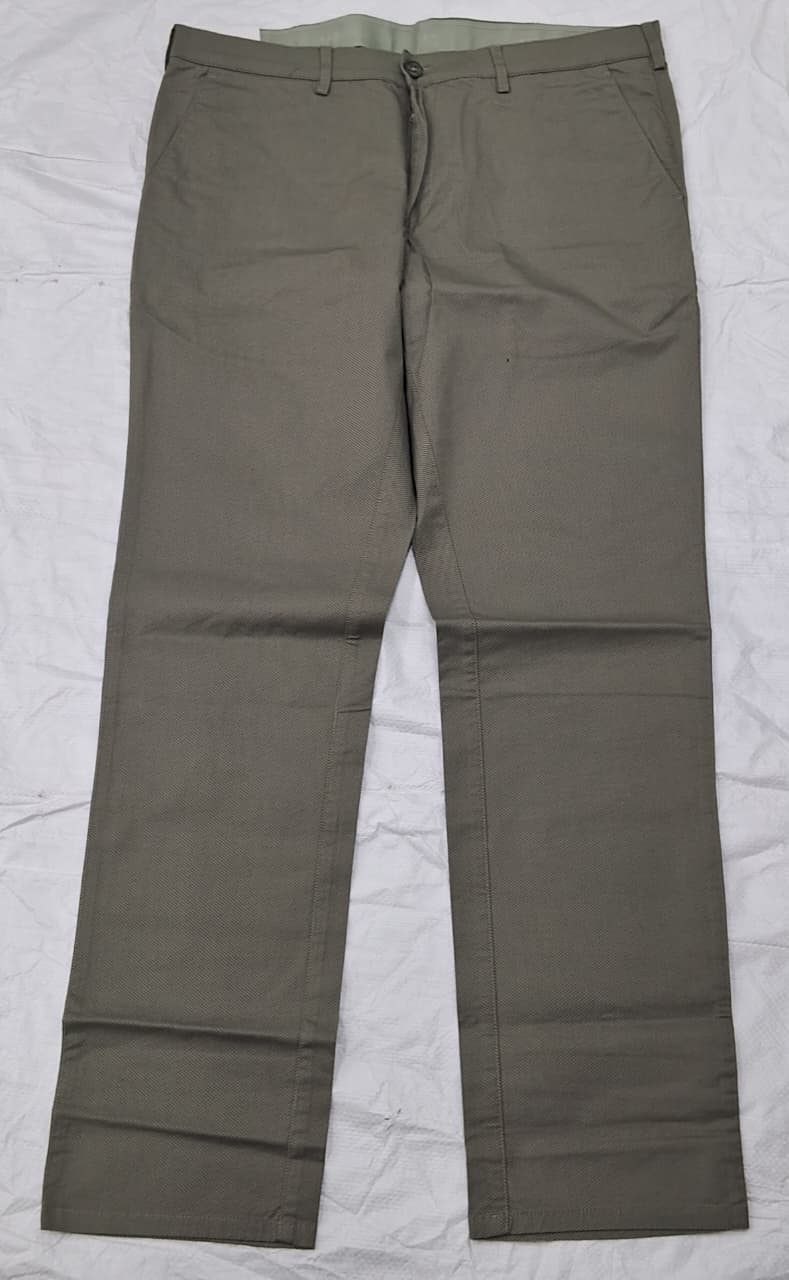
Slate blue, stone, sage and fawn sit between the core neutrals. They add individuality to a wardrobe while keeping a formal register, as long as the shirt and shoes stay classic.
For daywear, a trouser that is clearly lighter or darker than the jacket looks intentional. Two similar but unmatched shades can look like a suit that has lost its partner.
Black shoes suit black, charcoal and grey. Dark brown and burgundy flatter navy, grey, olive and the warm neutrals. Match belt to shoe.
From across a room, a trouser shows only its line. Up close, its construction shows. These are the points worth checking.
A firm, well-interfaced waistband holds its shape and keeps the shirt tucked. Inside, look for a neat lining or binding.
Evenly spaced and securely bar-tacked, sized for a dress belt rather than a casual one.
A hook-and-bar or button tab above a smooth zip fly, so the front stays flat.
Where present, they should lie closed when standing and open only as you sit or move.
Slant or on-seam side pockets that lie flat; jetted back pockets with clean, straight lips.
Straight, flat and finished inside so they neither fray nor show through the cloth.
A pressed crease runs centred down the front of each leg, from waistband to hem.
Fine, even and colour-matched; subtle enough that it is noticed only when looked for.
Neat, discreet and invisible from the outside; sometimes with a heel guard to protect the back.
The final test: the leg should fall straight from seat to shoe without twisting.
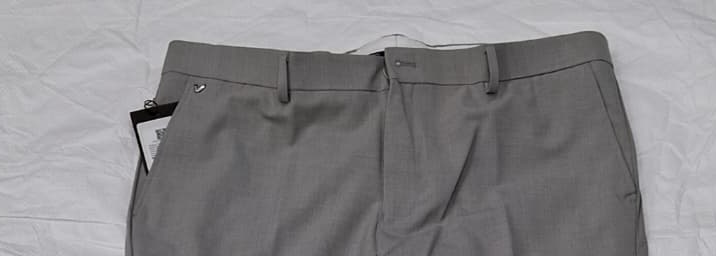
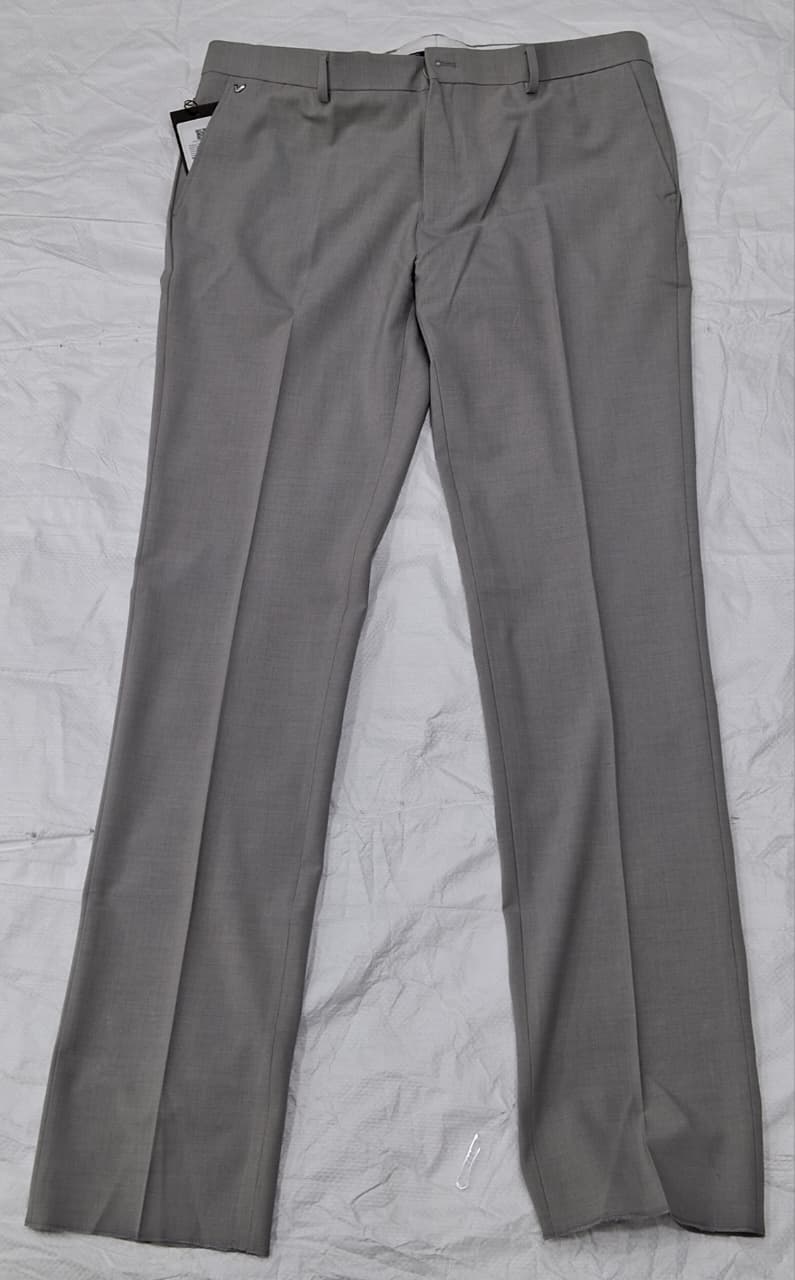
The same pair of formal pants can move through a whole working week. What changes is what you wear with it: a jacket for the meeting, an open collar for the flight, polished leather for the evening.
Follow the scenes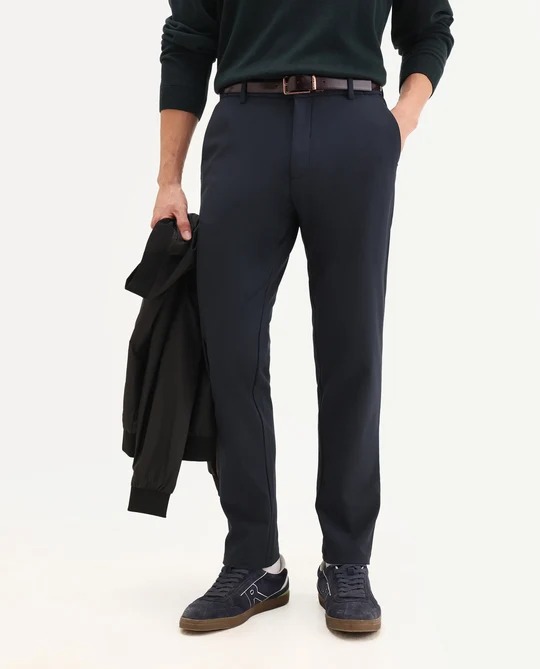
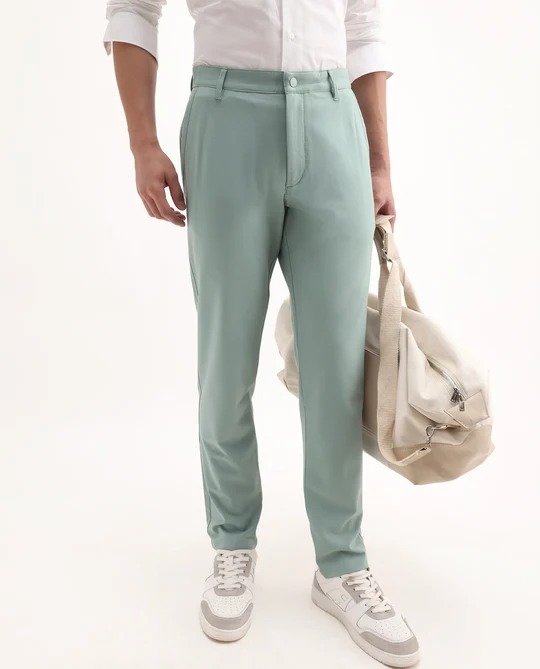
Charcoal or navy with a crisp shirt and polished leather.
A pressed crease and a jacket that contrasts with the trouser.
Wrinkle-resistant or stretch cloth, and a tapered leg.
Black or deep navy with sleek, lace-up shoes.
Grey and taupe with soft shirting and loafers.
Lighter tones, open collars and minimal accessories.
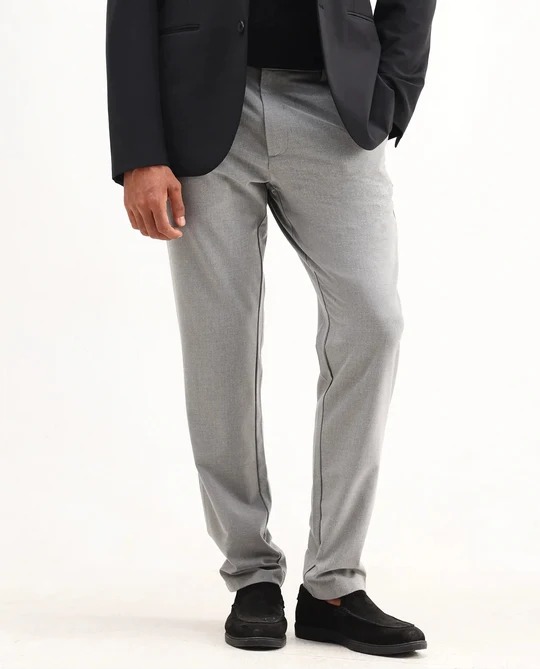
A trouser rarely works alone. It answers to the shirt above it, the jacket over it and the shoes beneath it. Coordination means choosing which piece leads and letting the others support it.
| Formal shirts | White and pale blue suit every trouser colour. For dark trousers, a lighter shirt gives clear, professional contrast. Keep collars structured and the tuck clean. |
|---|---|
| Business shirts | Fine stripes, checks and oxford weaves bring texture. Pair patterned shirts with plain trousers so the outfit has one point of interest. |
| Blazers | Choose a blazer that clearly contrasts with the trouser: navy over grey, charcoal over taupe, camel over navy. The jacket hem should roughly cover the seat. |
| Formal jackets | With a sports coat or structured jacket, a slimmer, cleaner trouser keeps the silhouette balanced. Fuller trousers suit softer, longer jackets. |
| Belts | Plain leather, around 3–3.5 cm wide, with a simple buckle. Match the leather colour and finish to the shoes. |
| Formal shoes | Oxfords and derbies for the most formal settings; loafers and monk straps for modern office dress. Shoe weight should match cloth weight. |
| Accessories | A slim watch, a quality leather bag, socks that continue the trouser colour. Small things that look considered. |
One dominant tone, one supporting tone, one accent.
Slimmer trousers with shorter jackets; fuller trousers with longer cuts.
The more formal the setting, the darker and plainer the trouser.
Leave one deliberate detail and remove the rest.
Essay 01 · Guide
Start with the occasion, then the fit, then the fabric. Leave colour for last, once the shape is right.
This site is Options Mall’s guide to men’s formal pants: a place to understand fit, fabric, colour and coordination before you choose your next pair.
Options Mall is based at the Vile Parle Shopping Centre in Juhu, Vile Parle West. For enquiries about men’s formal pants and formal wear, contact the team by phone or email.
XII. — Finale
Discover the details, proportions and styling principles that define contemporary men’s formal dressing.
Explore the formal pants collection